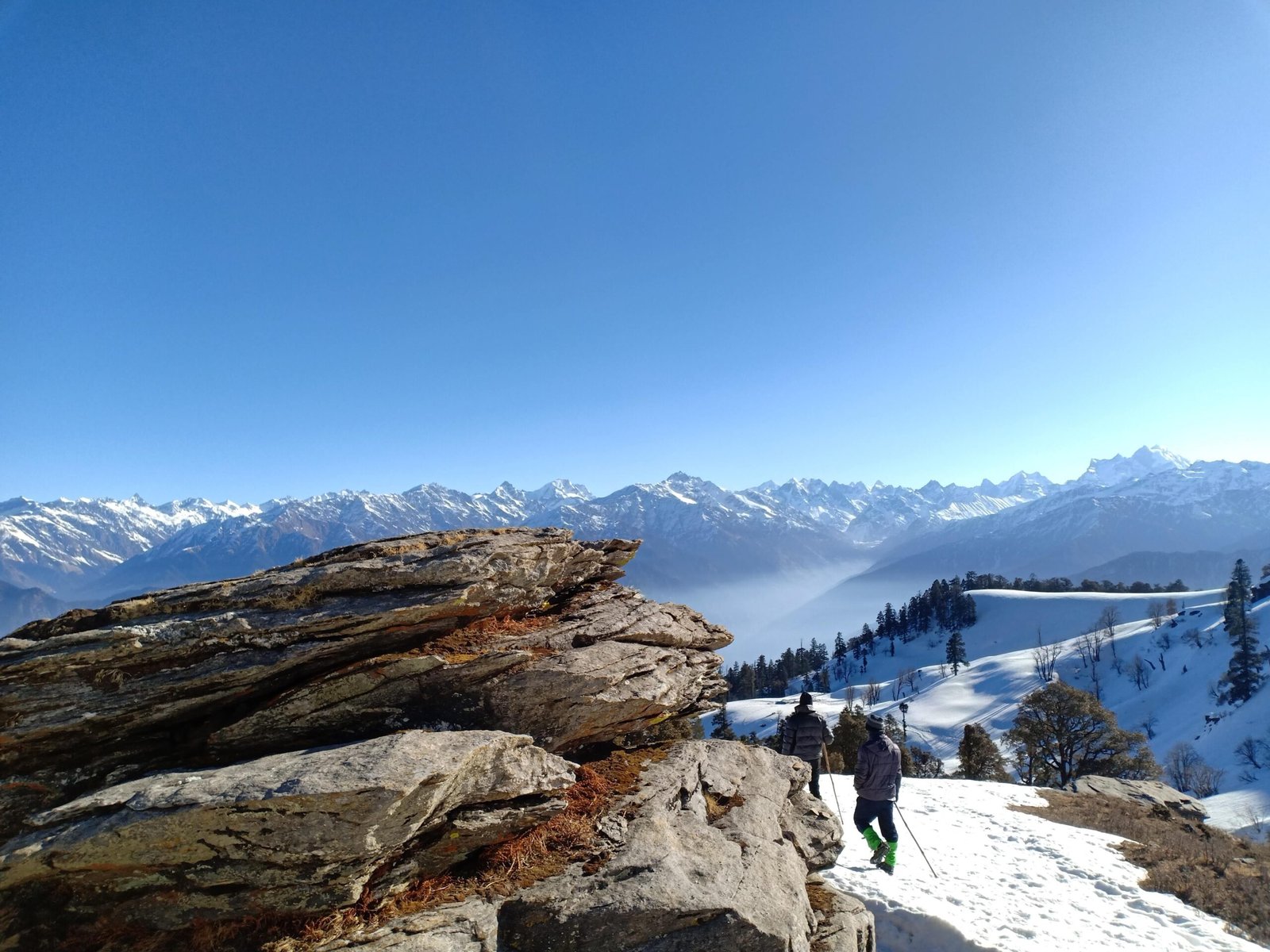
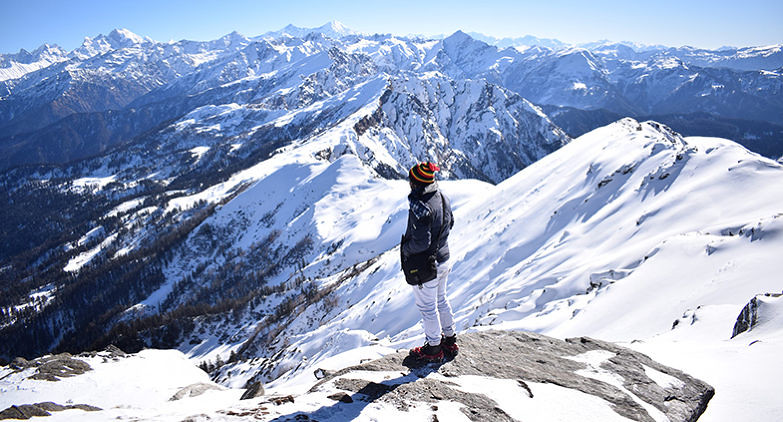
The peaks visible from Kedarkantha summit include Swargarohini, Bandarpoonch, Black Peak, Ranglana, and several snowy Himalayan ranges across Uttarakhand. Most people start the Kedarkantha trek expecting snow. Then they reach the summit and forget about the snow completely. The real surprise is the view.
You stand at 12,500 ft while giant Himalayan peaks rise around you. Cold wind blows across the ridge. The sky slowly changes colour. One mountain turns gold before the others. Another stays blue for a few more minutes. Then somebody asks the same question every winter. “Bhaiya, woh kaunsa peak hai?” That moment changes everything.
Once you know the names of the mountains, the summit feels more real. The view becomes personal. You stop looking at random white peaks. You start understanding the Himalayas around you. And honestly, that makes the climb feel even more special.
Also read here: Kedarkantha route map
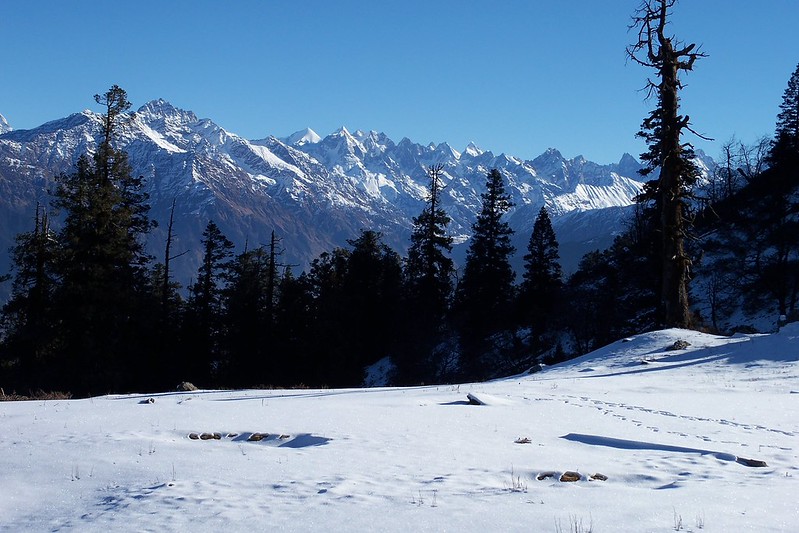
Why Kedarkantha Summit Gives Such Good Mountain Views
Kedarkantha sits inside Govind Wildlife Sanctuary in Uttarakhand. The summit is open and wide. That is why the mountain views feel so massive. Many Himalayan treks have blocked viewpoints. Trees cover the ridges. Nearby cliffs hide the horizon. Kedarkantha feels very different. Once you reach the top, the mountains open from every side.
Winter mornings usually give the clearest views. Cold air carries less haze. Fresh snow also makes the peaks look sharper. That is why most trekkers prefer the Kedarkantha trek in December or the Kedarkantha trek in January for summit views.
Sunrise matters too. Before sunrise, the mountains look pale blue. Then sunlight slowly reaches the upper ridges. Within minutes, the whole skyline turns orange and gold. Even people who do not care much about photography stand quietly here for a while.
If you are still deciding when to plan your trek, understanding the best time to visit Kedarkantha trek can help you choose between snowfall, clearer skies, or quieter trails.
Swargarohini Peak
Swargarohini peak is the most famous peak visible from Kedarkantha summit. It stands toward the northeast side and catches attention immediately because of its sharp snowy shape. Swargarohini I rises to around 6,252 metres. This peak is strongly linked with the Mahabharata.
The name roughly means “path to heaven.” Local stories say the Pandavas crossed these mountains during their final journey toward heaven. That story stays in your mind while watching sunrise hit the peak. And honestly, the mountain already looks mythical even without the legend.
How to Spot Swargarohini
- Look toward the northeast
- Notice the sharp icy summit
- Sunrise light reaches it early
- Appears taller than nearby ridges
Most trekkers click photos of this peak before learning its name.
Bandarpoonch Peak
Bandarpoonch stands toward the western side of the visible range.This mountain looks broad, calm, and heavily snow-covered during winter. Bandarpoonch I rises to around 6,316 metres. Its name comes from the Ramayana. “Bandar” means monkey. “Poonch” means tail. Local stories connect the mountain with Hanuman’s tail. Unlike Swargarohini, Bandarpoonch peak does not look sharp or aggressive. It feels wider and softer.
How to Spot Bandarpoonch
- Visible toward the western skyline
- Looks wide and stretched out
- Easy to identify because of its long ridge
- Appears bright white after snowfall
Many first-time trekkers recognise Bandarpoonch quickly because it stands out clearly.
Black Peak (Kalanag)
Black Peak is one of the most interesting mountains visible from Kedarkantha. It is also called Kalanag, which means “Black Cobra.” The name comes from its dark rocky summit. From certain angles, the peak looks like a cobra raising its hood. Black Peak rises to around 6,387 metres. It is the highest peak in the Bandarpoonch massif.
This mountain looks very different from nearby snowy peaks. Dark rock sections remain visible even during winter. That contrast makes it easier to recognise.
How to Spot Black Peak
- Look toward the northwest
- Search for dark rocky sections
- Appears steeper than Bandarpoonch
- Looks darker than nearby peaks
Trekkers often confuse it with another ridge first. Then guides point out the dark summit face and suddenly it becomes obvious.
Ranglana Peak
Ranglana is smaller compared to Swargarohini or Black Peak, but local guides often point it out during clear mornings. This peak stands at around 5,554 metres near the Devkyara Valley region. Ranglana looks softer and smoother than nearby mountains. Fresh snowfall makes it blend beautifully into the surrounding ridges.
How to Spot Ranglana
- Visible near the Swargarohini side
- Looks less sharp than Black Peak
- Easier to notice after sunrise
- Often identified during summit breaks
Many trekkers miss Ranglana initially because larger peaks grab attention first.
Gangotri and Yamunotri Side Ranges
Parts of the Gangotri and Yamunotri ranges also become visible during clear weather. Most trekkers cannot identify every summit from this distance. Still, these snowy ridges make the Himalayan view feel much larger. During sunrise, the distant mountains slowly change from grey to orange. That colour shift feels unreal in person.
Kinnaur Kailash Side Ranges
On very clear mornings, sections of the Kinnaur Kailash side ranges also appear from Kedarkantha summit. These mountains look much farther away than the nearby Garhwal peaks. Most people cannot identify them without guide support. But once somebody points them out, you realise how huge the Himalayan landscape really is.
One Common Mistake Trekkers Make
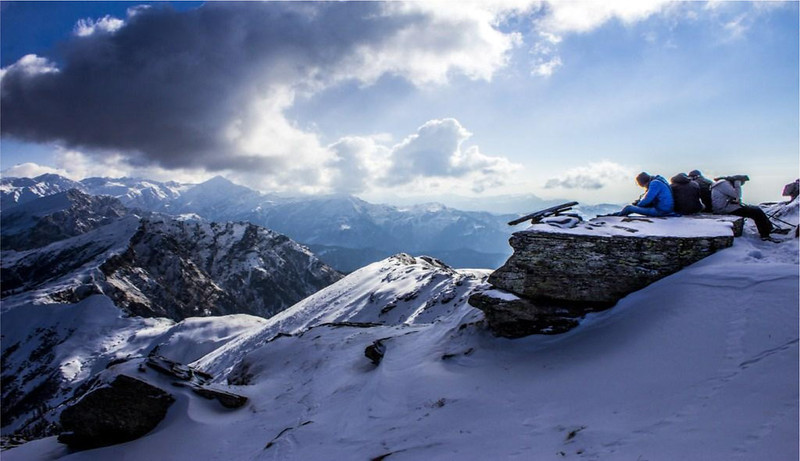
Most people rush the summit experience. They reach the top tired and excited. Then they start clicking photos immediately without properly observing the mountains around them. The better approach is slower. Sit quietly for a minute first. Let your breathing settle. Drink some water. Then start identifying peaks carefully with your guide.
Notice the shapes. Notice the ridges. Notice how sunlight reaches one mountain before another. And honestly, keep your phone away for a few minutes too.
Good preparation also changes how much you enjoy the summit morning. Wearing proper layers and carrying the best shoes for Kedarkantha trek helps a lot during icy summit climbs..
The best summit memories rarely come from perfect photographs. They come from small moments. Cold wind on your face. Somebody shouting excitedly after spotting Black Peak. Hot chai near the kedarkantha summit temples while the Himalayas slowly turn golden around you.
Years later, you may forget your exact summit timing. But there is a good chance you will still remember the first moment the Garhwal Himalayas opened around you from every direction.