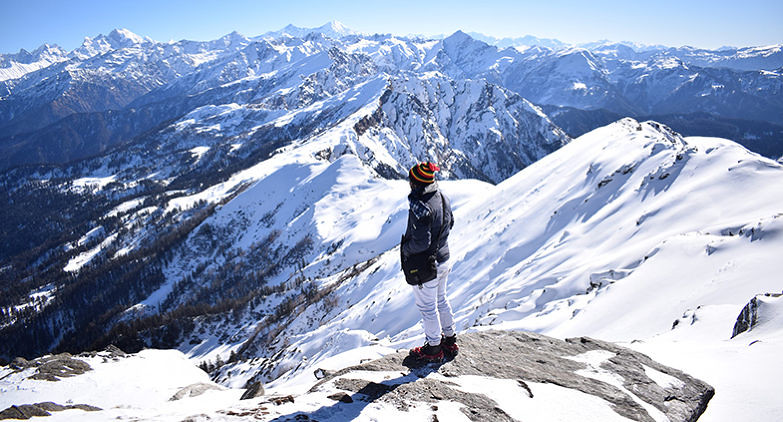
If you are stuck between Kedarkantha vs Brahmatal trek, the real decision is simple.
Do you want a short, structured snow summit experience near Sankri, or a longer Himalayan journey starting from Lohajung with wider ridge walks and clearer high-mountain views?
Both are winter treks in Uttarakhand. Both give snow. But they don’t feel the same on the ground. One is sharper and more direct. The other is longer and more open. Let’s break it down properly so you don’t choose blindly.
Also checkout: The complete Kedarkantha Trek Guide
Quick Comparison: Kedarkantha vs Brahmatal Trek
Factor | Kedarkantha Trek | Brahmatal Trek |
Base Village | Sankri (Uttarkashi) | Lohajung (Chamoli) |
Summit Altitude | ~3,800 m | ~3,734 m |
Trek Duration | 4–5 days | 5–6 days |
Trek Distance | ~20 km | ~24–26 km |
Difficulty | Easy to Moderate | Moderate |
Best Snow Months | Dec to Mar | Dec to Feb |
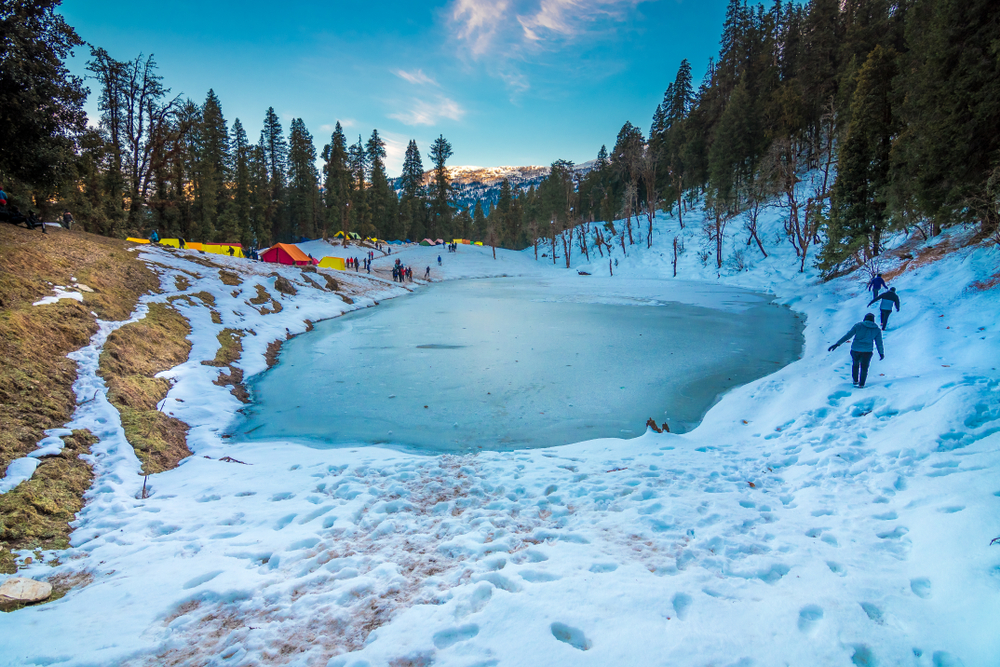
Famous For | Quick summit, dense forests | Frozen lakes, Mt. Trishul views |
Crowd Level | High | Moderate to Low |
This table alone answers 60% of the decision. Everything else is detail.
Kedarkantha vs Brahmatal Trek: Location and First Impressions
Kedarkantha starts from Sankri village, a busy trekking hub in Uttarakhand’s Uttarkashi region. The road from Dehradun is long but straightforward. Brahmatal starts from Lohajung in Chamoli district. The drive is longer, and the village feels quieter. Less commercial. More spaced out.
This matters more than people think. Because your trek doesn’t start at the first step on the trail. It starts on the road. And the road shapes your mindset.
Kedarkantha vs Brahmatal Trek Difficulty and Trek Style
Kedarkantha is easier to process mentally. The trail is well-marked. Camps are closer. You gain altitude in a steady rhythm. Brahmatal stretches your walking hours more. The trail feels longer between camps. You spend more time in forest walks and ridge sections.
In simple terms:
- Kedarkantha: shorter walking days, easier flow
- Brahmatal: longer walking days, more endurance needed
A first-time winter trekker often feels more confident on Kedarkantha. But someone with basic fitness and patience will enjoy Brahmatal more.
Get here the complete details on: The fitness & difficulty guide
Kedarkantha vs Brahmatal Trek Snow Experience
Snow is the main reason people search kedarkantha vs brahmatal trek. Kedarkantha gets consistent winter snow from late December onward. The forest sections turn white quickly. Summit climbs often happen in deep snow.
Brahmatal also gets strong snowfall, but it behaves slightly differently. Snow spreads across open slopes and lake zones.
A key difference:
- Kedarkantha: thicker forest snow experience
- Brahmatal: open snow fields and ridge snow
Also checkout: The best time to visit
Kedarkantha vs Brahmatal Trek Highlights and Peaks
This is where Brahmatal clearly stands apart.
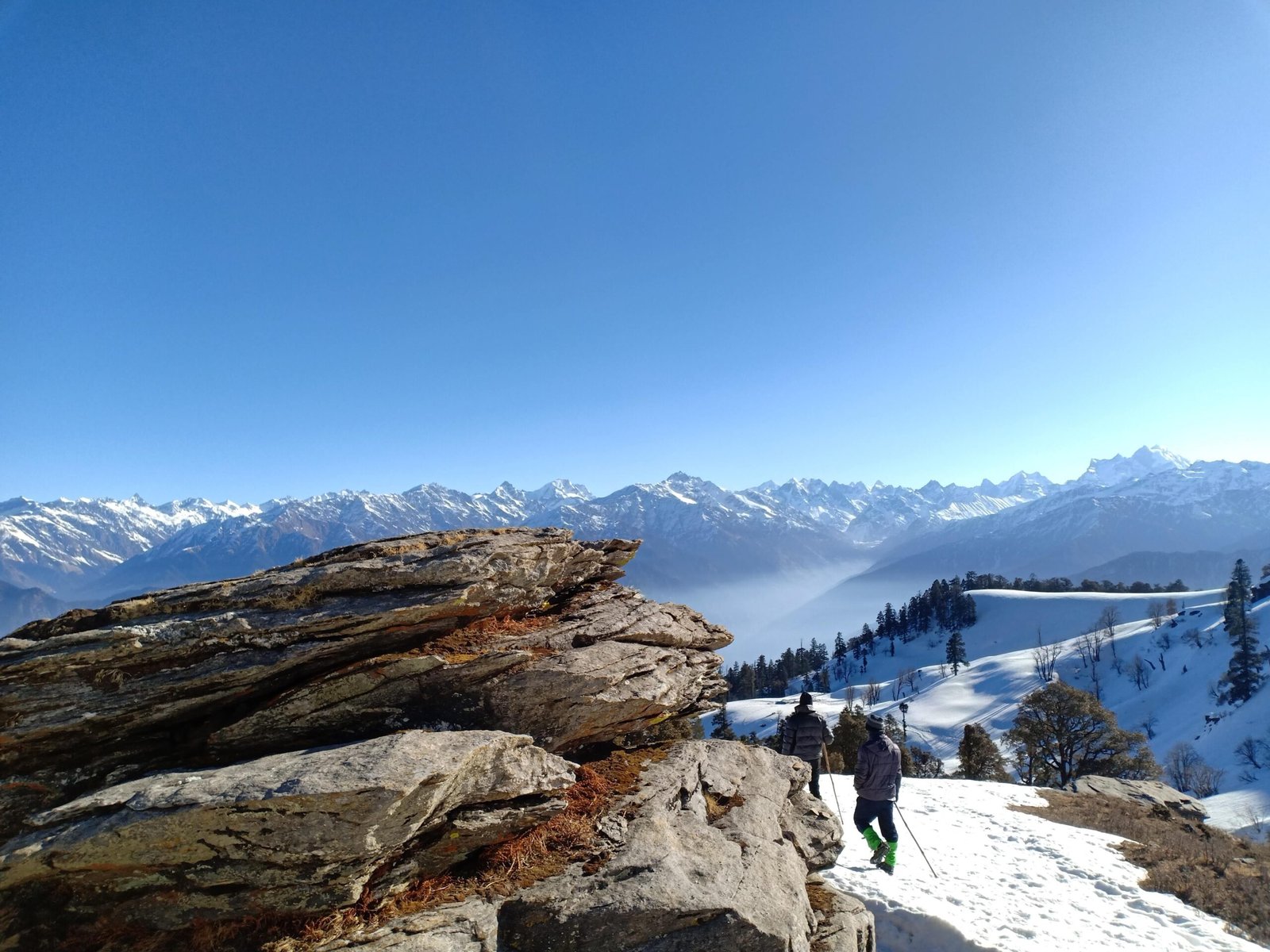
From Brahmatal, you get direct views of:
- Mt. Trishul (7,120 m)
- Mt. Nanda Ghunti (6,309 m)
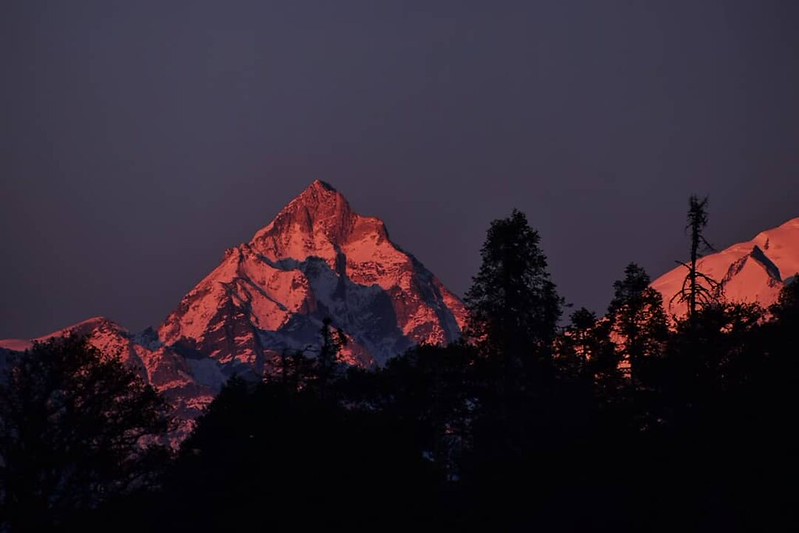
These peaks stay visible across multiple sections of the trek. Kedarkantha, on the other hand, is famous for its summit sunrise.
From the top, you see peaks like Swargarohini, Bandarpoonch, and Black Peak.
Read the complete details on: Kedarkantha summit day.
So the contrast is clear:
- Kedarkantha: summit-focused payoff
- Brahmatal: journey-wide mountain views
Kedarkantha vs Brahmatal Trek Forests and Trail Feel
Kedarkantha moves through dense pine forests like those described in Kedarkantha pine oak forests. The trail feels enclosed at lower altitudes. Snow sits heavily on branches. Brahmatal has a mix of oak and rhododendron forests. As you climb, forests open into ridge walks.
Even the silence feels different.
- Kedarkantha: active, enclosed winter corridor
- Brahmatal: open, spaced-out landscape
Also read here about: Best winter treks in Uttarakhand
Kedarkantha vs Brahmatal Trek Crowd and Atmosphere
Kedarkantha is one of the most popular winter treks in India. Expect multiple groups on the trail. Camps feel lively. Brahmatal is quieter. Fewer trekkers. Longer stretches where you may not see anyone.
So the choice becomes personal:
- Want energy and group vibe? Kedarkantha
- Want space and silence? Brahmatal
Read the comparison guide between: Kedarkantha vs Chandrashila
Kedarkantha vs Brahmatal Trek Cost and Time Commitment
Kedarkantha usually fits into 4–5 days. That keeps cost lower and makes it ideal for short winter breaks. Brahmatal takes around 5–6 days. Slightly longer travel time also adds to total cost.
If you are planning a full Kedarkantha experience, details like Kedarkantha trek cost and Kedarkantha trek package help in planning better.
So:
- Kedarkantha: quicker, lighter on budget
- Brahmatal: longer, more immersive
Kedarkantha vs Brahmatal Trek Best Choice for You
Now the real question. Choose Kedarkantha if:
- It’s your first snow trek
- You want a quick summit experience
- You prefer structured trails and camps
- You have limited days
Choose Brahmatal if:
- You want Mt. Trishul views
- You like quieter trails
- You enjoy long ridge walks
- You have more time and patience
Both are beginner-friendly in different ways. One builds confidence fast. The other builds experience slowly.
Kedarkantha vs Brahmatal Trek Final Thought
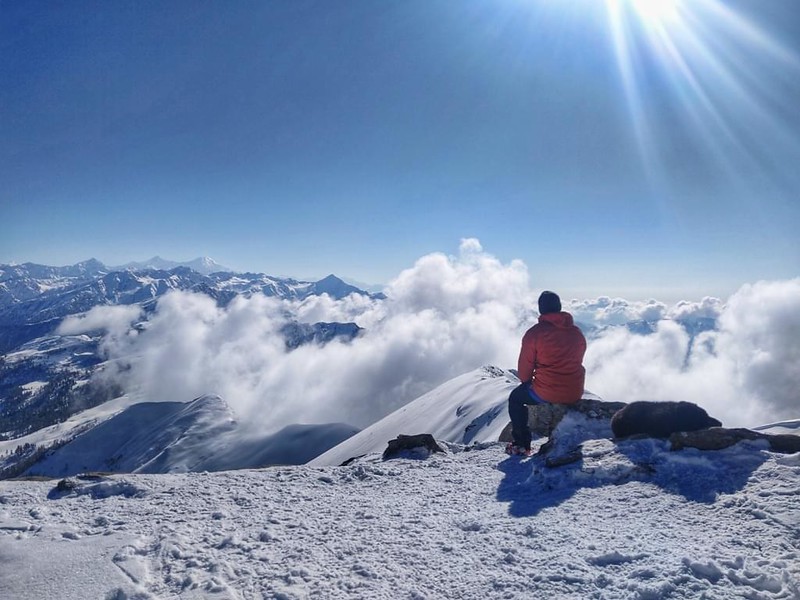
In the end, kedarkantha vs brahmatal trek is not about which one is better. It is about how you want winter to feel.
Do you want a sharp summit moment in deep forest snow? Or a longer Himalayan walk where peaks like Trishul stay in your line of sight for days?
Both give you winter. Just not the same version of it. And once you’ve walked either one in fresh snow, you’ll understand why people keep coming back to this debate.