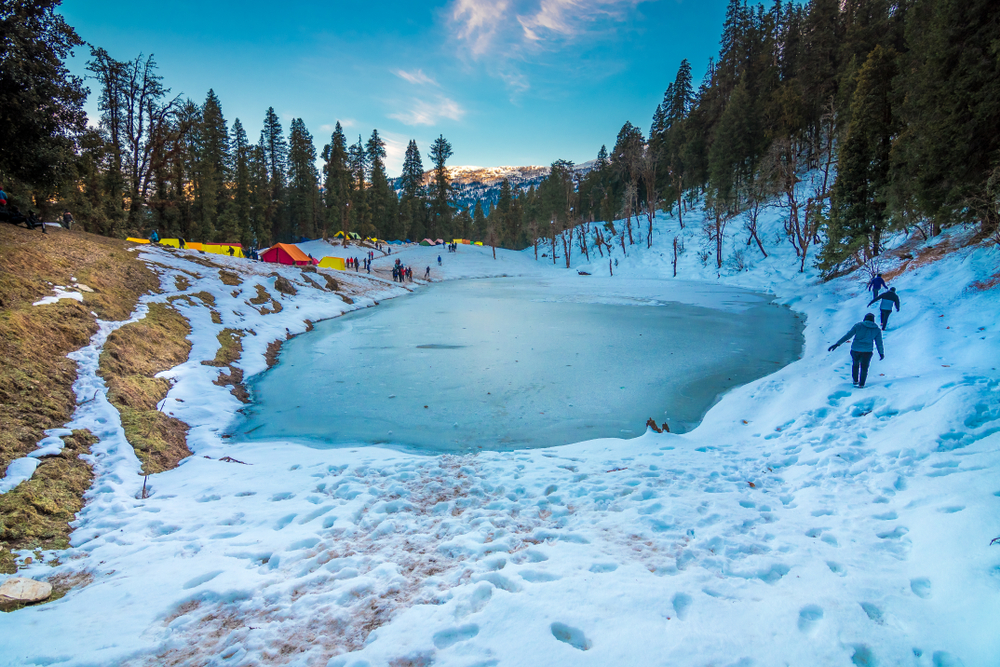
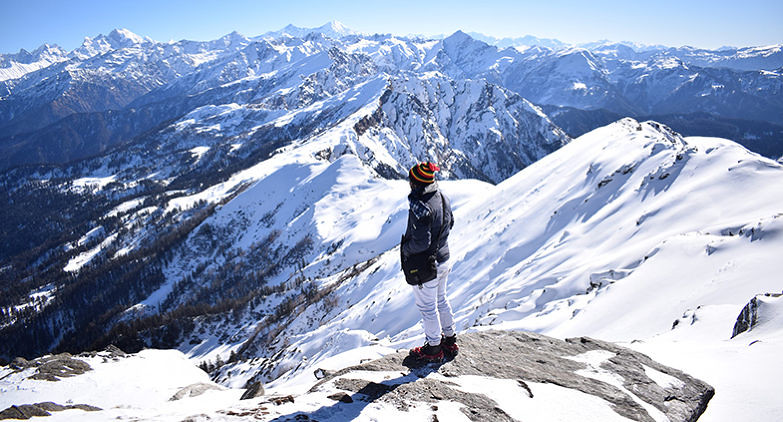
Yes, Juda Ka Talab usually starts freezing in late December, becomes largely frozen in January, and often stays partially frozen through early February, depending on snowfall and winter temperatures. Many people book the Kedarkantha Trek after seeing photographs of a frozen Himalayan lake surrounded by snow-covered forests. Then the obvious question comes up. Will Juda Ka Talab actually be frozen during your trek?
The answer depends on when you visit and how harsh the winter has been that year. Some trekkers arrive to find a thin sheet of ice near the edges. Others reach the campsite during peak winter and see a lake that looks almost completely frozen.
If a frozen lake is one of the main reasons you are choosing Kedarkantha, it helps to understand exactly when and why the lake freezes.
What Is Juda Ka Talab?
Juda Ka Talab is a small natural lake located at an altitude of about 2,700 metres (8,850 feet). It sits roughly 4 to 5 kilometres from Sankri and serves as the first major campsite on the Kedarkantha trek. Most trekking groups reach the lake within three to four hours of leaving Sankri. The route passes through dense pine and oak forests of Kedarkantha before opening into a beautiful clearing around the lake.
For many trekkers, this campsite becomes the highlight of the journey. The forest setting feels peaceful, especially after leaving behind busy towns and city traffic. That is why the frozen lake attracts so much attention every winter.
Also read here about: Kedarkantha route map
Why Is It Called Juda Ka Talab?
Locals have shared stories about the lake for generations. One popular explanation is that the lake often appears like two water bodies connected together. The word “Juda” means joined or connected, which is believed to have inspired the name Juda Ka Talab.
Another story links the lake to Lord Shiva. According to local folklore, Lord Shiva once untied a portion of his hair in this region. Water is believed to have fallen from his locks and collected here, eventually forming the lake. Whether you see it as mythology or local heritage, the story adds another layer of charm to the place.
Many trekkers hear this legend for the first time while sitting beside the lake after reaching camp.
Frozen Lake Kedarkantha Juda Ka Talab When Does It Freeze?
The freezing process happens gradually. The lake does not suddenly turn into solid ice after the first snowfall. Several cold nights are needed before ice starts forming across larger sections of the water.
A typical winter pattern looks like this:
- Early December: Mostly open water
- Mid to Late December: Ice begins forming near the edges
- January: Usually the most frozen period
- Early February: Significant ice cover often remains
- Late February: Ice starts breaking up and melting
- March: Most frozen sections disappear
Every winter behaves differently. Heavy snowfall can speed up freezing. A warmer season may delay it. That is why photographs from one year may not perfectly match conditions during another year. If you are planning a Kedarkantha trek in December or a Kedarkantha trek in January, checking recent weather reports always helps.
Also read here: the wide open campsites
How Cold Does It Get Around Juda Ka Talab?
Temperature plays the biggest role in freezing conditions. During peak winter, daytime temperatures around Juda Ka Talab often range between 4°C and 10°C. Night temperatures regularly drop below freezing and may fall to -5°C or even lower during cold spells. Some severe winters have recorded temperatures close to -10°C around the campsite area.
These freezing nights gradually build the ice layer that trekkers come to see. When people ask when the lake freezes, the real answer is simple. The colder the nights remain for several days in a row, the stronger the ice formation becomes.
How Frozen Does the Lake Actually Get?
This is where social media can sometimes create unrealistic expectations. Many people imagine a frozen lake that looks like a skating rink. Juda Ka Talab rarely looks that uniform.
Some sections freeze more completely than others. Snow can cover parts of the surface and make the entire lake appear frozen from a distance. Underneath, conditions may vary.
The appearance also changes during the day. Early mornings are usually colder and offer the most impressive frozen views. By afternoon, sunlight can soften ice near the edges.
Is January the Best Month to See a Frozen Lake?
For most trekkers, yes. January combines the coldest temperatures with the highest chance of snow accumulation. This creates the best conditions for ice formation.
We often notice that trekkers visiting in January experience the winter scenery they imagined while planning the trip. Snow-covered trees, frozen sections of the lake and white campsites usually come together during this period.
Nature never offers guarantees. Still, January gives you the highest probability. It is also one reason Kedarkantha consistently ranks among the best winter treks in India.
Can You Walk on the Frozen Lake?
This is one of the most debated topics on the trek. Some trek operators allow people to step onto frozen sections when conditions appear stable. Many online photographs show trekkers standing on parts of the ice. At the same time, experienced trek leaders often advise caution. The reason is simple. Ice thickness is not always consistent across the lake. One section may feel solid while another remains weaker underneath. Snow can also hide thinner areas.
If your group leader advises against walking on the ice, it is usually based on safety rather than caution for its own sake. The frozen lake is beautiful to admire even from the shoreline.
What Does the Frozen Lake Look Like at Sunrise?
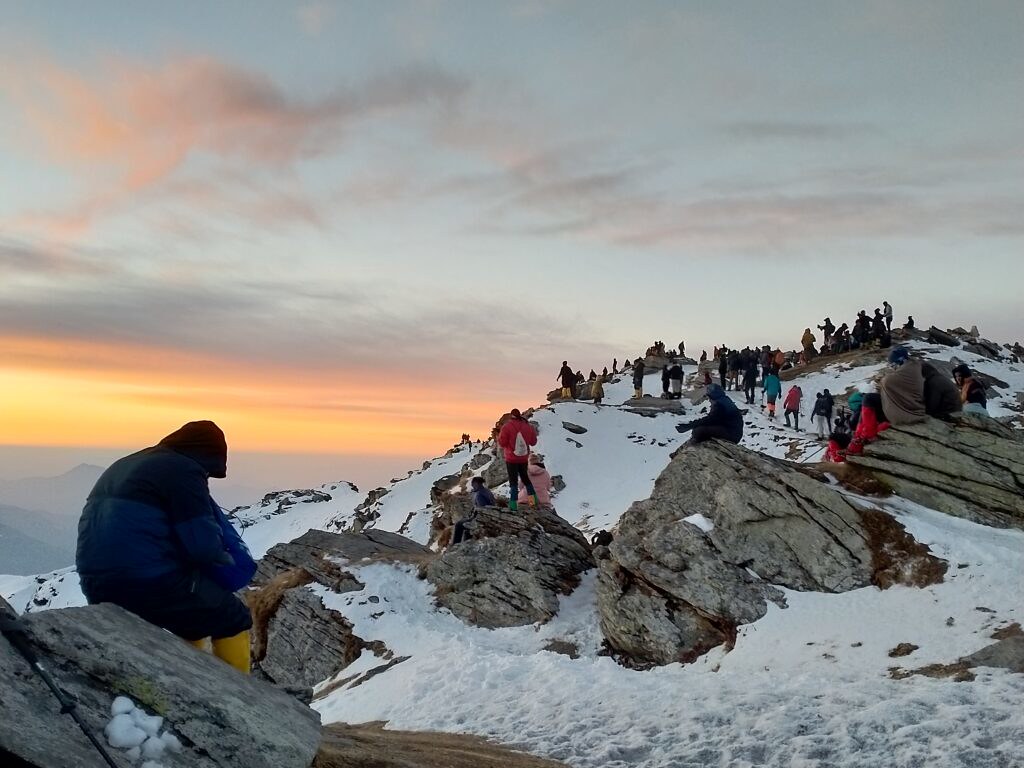
This is often the moment people remember long after the trek ends. Before sunrise, the campsite feels silent. Frost covers tents. Water bottles sometimes develop a thin layer of ice overnight. Then the first light reaches the forest. The snow begins to glow. Frost sparkles on branches. Frozen sections of the lake reflect soft shades of orange and gold.
For a few minutes, everything feels still. Even trekkers busy taking photographs often pause and simply watch the scene unfold. Those interested in capturing the moment should look at some useful Kedarkantha trek photography tips before their trip.
Should You Plan Your Trek Around the Frozen Lake?
That depends on what kind of experience you want. If seeing a frozen lake is a major priority, January and early February are usually the safest choices. If you prefer slightly milder weather, late December can also work well while still offering winter conditions.
Think about your priorities before booking. Understanding the best time to visit Kedarkantha Trek will help you set realistic expectations.
Ask yourself:
- Do I want maximum snow?
- Do I want the highest chance of seeing ice?
- Am I comfortable with sub-zero nights?
- Is photography important to me?
Your answers will help you choose the right departure date. Packing proper winter layers and following a reliable Kedarkantha trek packing list can make the experience much more comfortable.
FAQs
What is the altitude of Juda Ka Talab?
Juda Ka Talab sits at approximately 2,700 metres or 8,850 feet above sea level.
How far is Juda Ka Talab from Sankri?
The lake is about 4 to 5 kilometres from Sankri and usually takes three to four hours to reach on foot.
What does Juda Ka Talab mean?
The name is commonly believed to refer to two connected water bodies, which is why locals call it the “joined lake”.
Is Juda Ka Talab frozen in December?
It can be, especially during the second half of December. Conditions vary each year.
Which month offers the best frozen lake views?
January generally provides the highest chance of seeing substantial ice cover.
Is it safe to walk on the frozen lake?
Conditions vary every winter. Some operators allow it when ice appears stable, while many experienced trek leaders still recommend caution.
Key Takeaways
- Juda Ka Talab sits at about 2,700 metres elevation.
- It is located around 4 to 5 kilometres from Sankri.
- The lake serves as the first major campsite on the trek.
- Ice usually begins forming during late December.
- January offers the best chance of seeing a frozen lake.
- Early February can still provide excellent frozen conditions.
- Local folklore connects the lake to Lord Shiva.
- Walking on the ice remains a judgement call based on current conditions and guide recommendations.
Months after your trek, you may forget the exact distance you walked or the number of layers you wore. Yet there is a good chance you will remember that quiet winter morning beside a frozen Himalayan lake, perhaps after a long Day 2 trek from Sankri to Juda Ka Talab, and wonder when you can experience it again