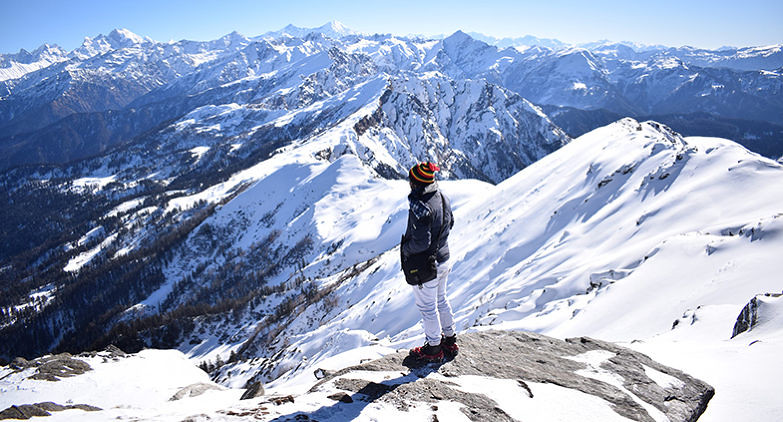
Yes, you can see parts of the Har Ki Dun region during the Kedarkantha descent. The best views usually come after you leave the summit and walk towards Hargaon and Juda Ka Talab. On a clear day, you can see famous peaks like Swargarohini, Bandarpoonch, and Black Peak (Kalanag), along with deep valleys, thick forests, and long mountain ridges.
Most trekkers think the summit is the main highlight of the Kedarkantha Trek. The summit is beautiful, but many people are surprised by how good the views are on the way down. The descent gives you more time to enjoy the landscape and notice details that you may miss while climbing.
Also read about the: Kedarkantha route map
Can You See Har Ki Dun Valley from Kedarkantha?
Yes, but you will not see the whole Har Ki Dun Valley spread out below you. What you see is the larger Har Ki Dun region. This includes nearby valleys, mountain ridges, forests, and some of the famous peaks connected to the area. Much of this landscape falls within the Govind Pashu Vihar Wildlife Sanctuary, one of the most important protected areas in Uttarakhand.
This is why many trekkers search for the Har Ki Dun Valley view from Kedarkantha descent before planning their trek. They want to know if the views are worth it. The answer is yes.
Why the Descent Gives Better Valley Views
At the summit, most people are busy taking photos and enjoying the feeling of reaching the top. During the descent, things become quieter. You are not rushing anymore. The trail becomes easier, and you have more time to look around.
The changing angle of the trail also helps. As you walk down, the valleys begin to open up. New ridges appear, and the mountains look different from every turn.
Many trekkers say they spend more time looking at the scenery during the first hour of descent than they do at the summit itself. If you are curious about the complete summit experience, our guide to Kedarkantha Summit Day explains what to expect.
Suggested read: Kedarkantha basecamp
Where You Get the Best Views
The Kedarkantha descent Har Ki Dun Valley view is not limited to one place. Different parts of the trail offer different views.
Summit to Hargaon
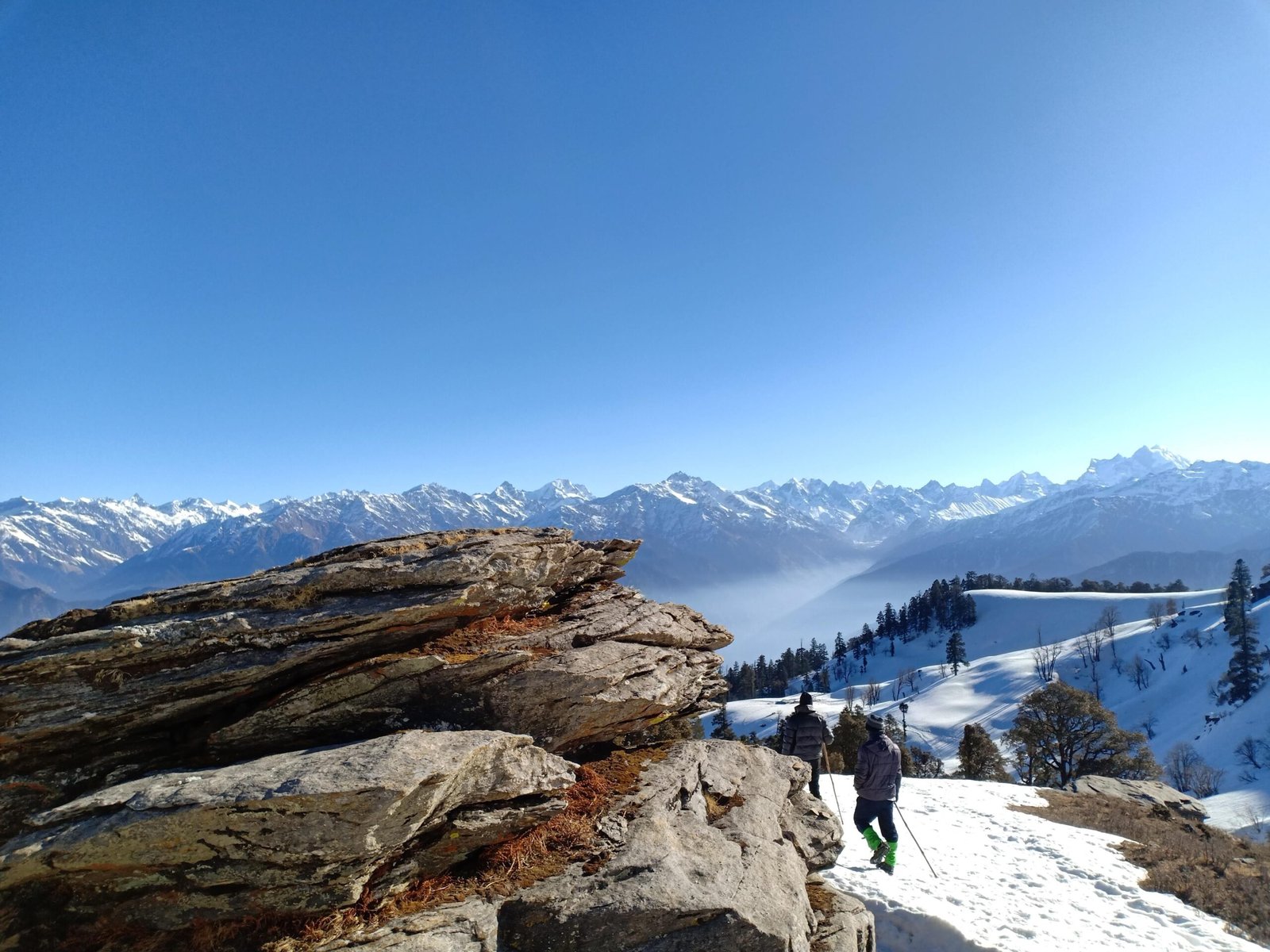
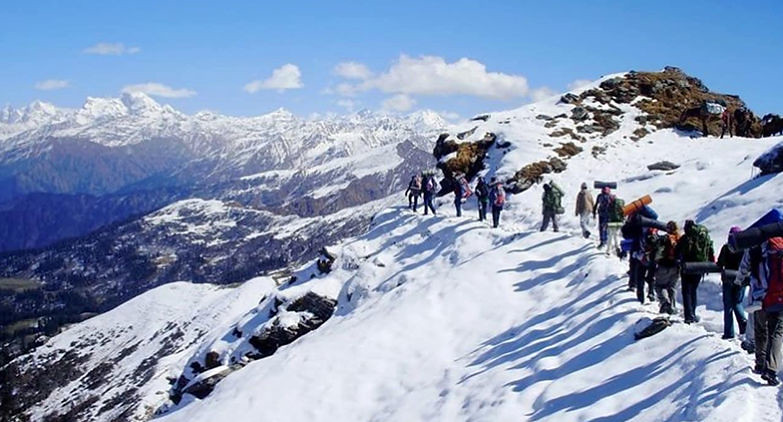
This is one of the best sections for mountain views. As you leave the summit, wide ridges stretch out in front of you. On clear days, Swargarohini stands tall in the distance. Bandarpoonch and Black Peak can also be seen from many points along the trail. You can also explore more mountains in our guide to the peaks visible from Kedarkantha summit.
In winter, the snow-covered slopes make the whole scene look even better. This is one reason why the Kedarkantha winter trek is so popular.
Hargaon Meadows
Hargaon is a campsite that many trekkers remember for its open views. The meadows here give you a clear look at the surrounding mountains and valleys. There are fewer trees blocking the view, which makes it a great place for photos. If you stop here for a few minutes, you can really take in the size of the landscape.
Also read: where is Kedarkantha
Juda Ka Talab
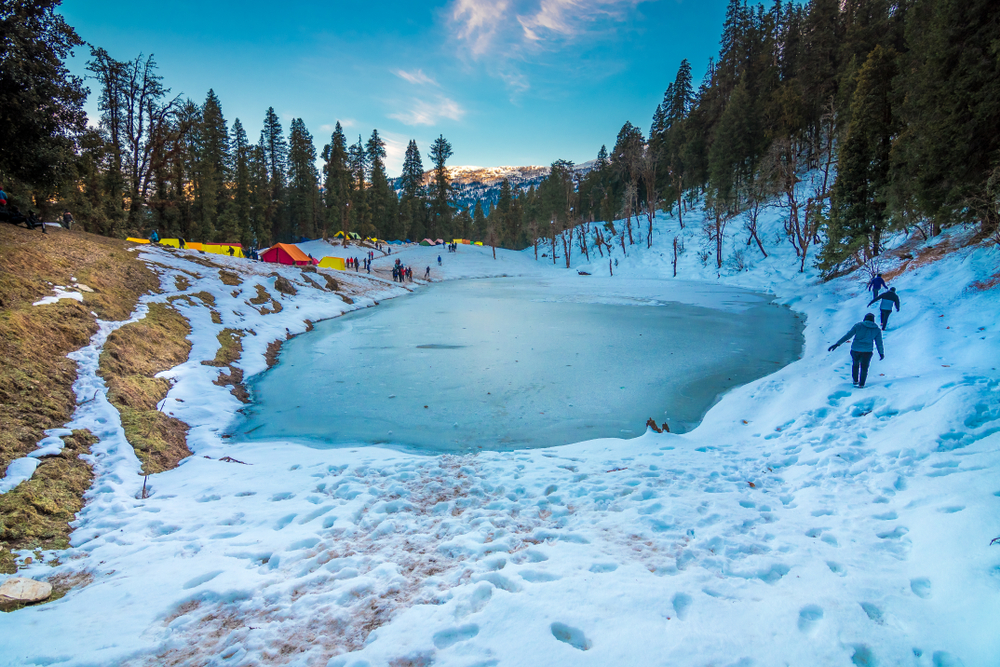
As you move closer to Juda Ka Talab, the scenery changes again. Tall pine trees line the trail. Through gaps in the forest, you can still see parts of the mountain ranges. These beautiful Kedarkantha pine and oak forests are one of the highlights of the trek.
In winter, the frozen lake adds extra beauty to the area. This section feels peaceful and calm. It is very different from the open ridges higher up.
Peaks You Can See Towards the Har Ki Dun Side
Many trekkers want to know exactly which mountains are visible from Kedarkantha.
Some of the most famous peaks include:
- Swargarohini (6,252 m) – The best-known peak in the Har Ki Dun region.
- Bandarpoonch (6,316 m) – A large snow-covered mountain.
- Black Peak or Kalanag (6,387 m) – One of the highest peaks in the area.
- Draupadi Ka Danda – A well-known peak visible on clear days.
- Rupin Valley ridges – Long mountain ridges that add depth to the view.
Seeing these peaks helps you understand how large the Garhwal Himalayas really are.
The Link Between Har Ki Dun and Kedarkantha
Har Ki Dun and Kedarkantha are different treks, but they are part of the same mountain region. The journey to Kedarkantha starts from Sankri Village, often called the gateway to many famous Himalayan treks. If you are planning your visit, this guide to Sankri, Uttarakhand’s gateway treks can help.
Har Ki Dun is often called the Valley of Gods. Local people connect this area with stories from the Mahabharata. Many trekkers visit Har Ki Dun because of both its beauty and its history.
Villages like Osla still keep many old traditions alive. When you look towards the Har Ki Dun side from Kedarkantha, you are looking at a landscape that has been important to local people for hundreds of years. This makes the view feel even more special.
Best Time to See Clear Valley Views
The clearest views usually come during winter and late autumn. Cold air often means less haze. This makes the mountains look sharper and easier to see.
For the best visibility:
- Trek between December and February for snow views.
- Visit in October or November for clear skies.
- Start early in the morning.
- Keep your camera ready during the descent.
- Check the weather before summit day.
Many trekkers prefer the Kedarkantha trek in December or the Kedarkantha trek in January because visibility is often excellent. You can also check the complete guide on the best time to visit Kedarkantha Trek.
Photography Tips
Many trekkers save all their photos for the summit. That is a mistake. The descent gives you more variety. You can capture mountains, forests, meadows, and valleys in one section of trail.
Good photo subjects include:
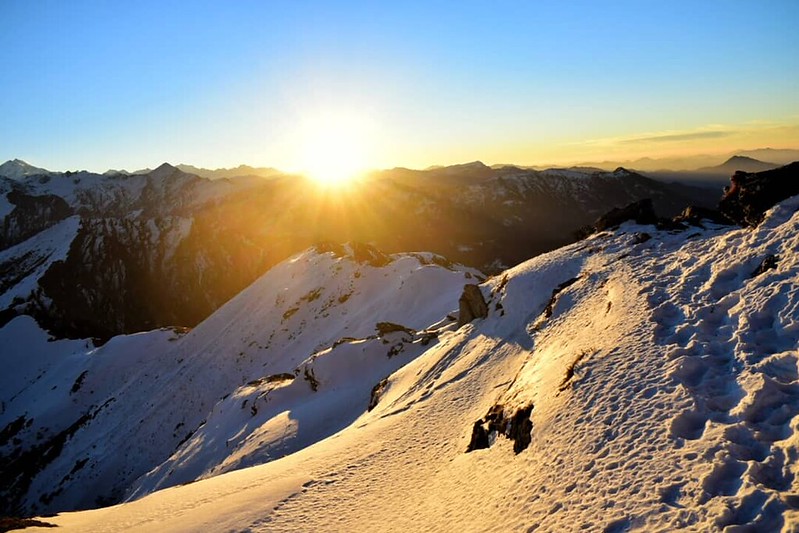
- Swargarohini in the morning light.
- Snow-covered ridges near the summit.
- Hargaon meadows.
- Forest trails near Juda Ka Talab.
- Trekkers walking along the ridge.
If photography is one of your goals, check our detailed guide on Kedarkantha trek photography. Early morning light usually gives the best results.
FAQs
Can you see Har Ki Dun Valley from Kedarkantha?
You can see parts of the larger Har Ki Dun region, along with nearby valleys and mountain ranges.
What is the best viewpoint on the Kedarkantha descent?
The stretch between the summit and Hargaon offers some of the widest views.
Which mountains are visible from Kedarkantha?
Swargarohini, Bandarpoonch, Black Peak (Kalanag), and Draupadi Ka Danda are often visible on clear days.
Is Hargaon better than Juda Ka Talab for photos?
Hargaon is better for wide mountain views. Juda Ka Talab is better for forest and lake photos.
Are the views worth stopping for during the descent?
Yes. Many trekkers feel the descent offers some of the best scenery of the entire trek.
When you start walking down from Kedarkantha, do not keep your eyes only on the trail. Look towards the valleys and distant peaks. You may find that some of the best views of the trek are waiting after the summit, not before it.