The story behind Kedarkantha mythology is linked to Lord Shiva, old village stories, and the deep faith of the people who have lived in these mountains for hundreds of years. Today, many people visit the Kedarkantha trek for its snowy trails. But long before trekking became popular, local people believed this mountain was a sacred place.
If you ask five local people about Kedarkantha, you may hear five slightly different stories. That is normal in the Himalayas. These stories have been passed from one family to another for many generations. The details may change, but one thing stays the same. Almost every story is connected to Lord Shiva.
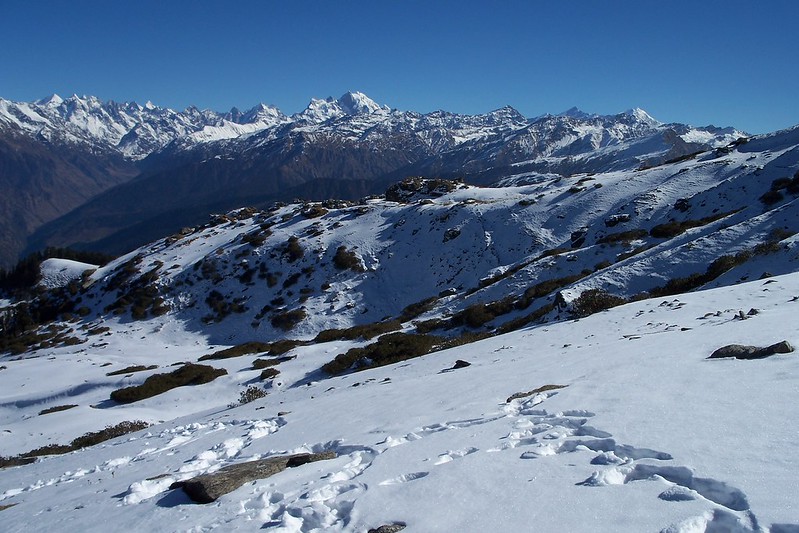
The Story Behind Kedarkantha Mythology
The best-known legend says that Lord Shiva came to this mountain to meditate. He wanted a quiet place far away from the noise of the world. The forests were peaceful, and the mountain gave him the silence he was looking for.
The story says that the Pandavas wanted to build a temple for Lord Shiva here. They carried big stones and slowly built the temple. Soon, the walls reached the level of Shiva’s kantha, which means throat.
Before the temple was finished, the peace of the mountain was broken. Some people say the sound of cows disturbed Lord Shiva. Others say nearby villagers or shepherds made enough noise to break his meditation.
Lord Shiva then left the mountain before the temple was complete. Local people believe he later went to Kedarnath to continue his meditation. Since the temple had reached only his throat, the place became known as Kedarkantha, or “Kedar’s throat.”
No one can prove this story with history books. It is a local legend that has lived in these mountains for many years. Even today, guides and villagers happily share it with visitors.
What Does Kedarkantha Mean?
Many people ask about the meaning of the name. Most local people explain it like this.
- Kedar means Lord Shiva.
- Kantha means throat or neck.
Together, the name is understood as “The Throat of Lord Shiva.”This meaning comes from local tradition. It is not based on written historical records. Even so, it is the story most people know.
The Story of Juda Ka Talab
The legends do not stop at the summit. The famous lake called Juda Ka Talab also has a story connected to Lord Shiva. People believe the lake was formed from a lock of Shiva’s matted hair. Some say water fell from his hair and created the lake. The word “Juda” means a tied bundle of hair, which is why the lake has this name.
There is no proof that this really happened. Still, local families have shared this story for many generations. Many trekkers hear it for the first time while camping beside the lake.
How Is Kedarkantha Connected to Lord Shiva?
Kedarkantha is not one of the five Panch Kedar temples. Still, many people connect it with the same Lord Shiva stories found across the Garhwal Himalayas. In Hindu tradition, Lord Shiva appeared in different places after the Pandavas searched for him.
That story is linked with the Panch Kedar temples. Because Kedarkantha also has its own Shiva legend, many people see it as part of the same sacred mountain region. This connection comes from faith and local beliefs, not from written history.
Why Do People Think Kedarkantha Is Sacred?
The mountain is not sacred because of one story alone. It is sacred because people have respected it for a very long time. Families living near Sankri Village have grown up listening to these legends.
They offer prayers before climbing the mountain and treat it with great respect. Their faith has kept these stories alive for many years. When you visit Kedarkantha, you are walking through a place that means much more to local people than just another trekking trail.
The Temple at the Summit
When you reach the top, you will see a small temple. It is simple, but it means a lot to local people. Near the temple, you will also see a trishul, prayer flags, and small bells left by devotees. Many trekkers stop here for a few quiet moments. Some pray. Others simply enjoy the peace before taking photographs.
History of Kedarkantha
The history of Kedarkantha is different from its mythology. Unlike Kedarnath, this mountain is not mentioned as a famous pilgrimage place in old religious books. Most of its stories have been passed down by local people through spoken words instead of written records.
Long before trekking became popular, shepherds and villagers walked these forest trails with their animals. The mountain has always been a part of their daily life. Today, trekkers also enjoy walking through the beautiful pine and oak forests of Kedarkantha that have been part of these stories for generations. Today, thousands of trekkers visit every winter. Even so, the old stories are still remembered.
Legend and History Are Not the Same
It is important to understand the difference. History is based on facts and written records. Myths and legends grow through stories shared by people over many years. That does not make the legends less valuable. They are an important part of the culture of the Himalayas. They help us understand how local people see these mountains.
How You Can Respect This Sacred Place
You do not need to follow the local faith to show respect.
A few simple habits are enough.
- Do not throw plastic or rubbish on the trail.
- Keep your voice low near the summit temple.
- Respect local traditions and customs.
- Do not move prayer flags or religious objects.
- Leave the mountain as clean as you found it.
Small actions like these also help protect the forests of Govind Pashu Vihar Wildlife Sanctuary, where the trek takes place.
Why This Story Matters
Many people come to Kedarkantha for snow and mountain views. They return home with memories of something much deeper. When you know the story behind Kedarkantha mythology, every part of the trek feels different. Juda Ka Talab becomes more than a campsite. The summit temple becomes more than a photo stop. Even the quiet wind feels special because you know the stories that have lived here for generations. You do not have to believe every legend. But when you understand why local people respect this mountain, the journey becomes much richer.
Quick Facts
Feature | Details |
Main deity | Lord Shiva |
Famous legend | Shiva left before a temple reached beyond his throat |
Name meaning | The Throat of Lord Shiva |
Summit temple | Small shrine with a trishul, bells, and prayer flags |
Juda Ka Talab | Linked to the story of Shiva’s matted hair |
History | Based mainly on local oral traditions |
Panch Kedar | Not one of the Panch Kedar temples |
FAQs
What is the story behind Kedarkantha mythology?
The most popular local story says Lord Shiva came here to meditate. A temple was being built for him, but he left before it was finished. Local people believe this is how Kedarkantha got its name.
What does Kedarkantha mean?
Many people believe the name means “The Throat of Lord Shiva.” It comes from the words Kedar and Kantha.
Why is Kedarkantha sacred?
Local people have respected this mountain for many generations because of its connection with Lord Shiva and the summit temple.
Is Kedarkantha part of the Panch Kedar?
No. It is not one of the Panch Kedar temples. Still, many people connect it with the wider Lord Shiva traditions of the Garhwal Himalayas.
Is this story historically proven?
No. The stories come from local folklore. Different villages tell them in different ways, and there is no historical proof.
The snow on Kedarkantha melts every year, but its stories never fade. When you stand on the summit, you are not only looking at the Himalayas. You are standing where faith, history, and local traditions have come together for generations.